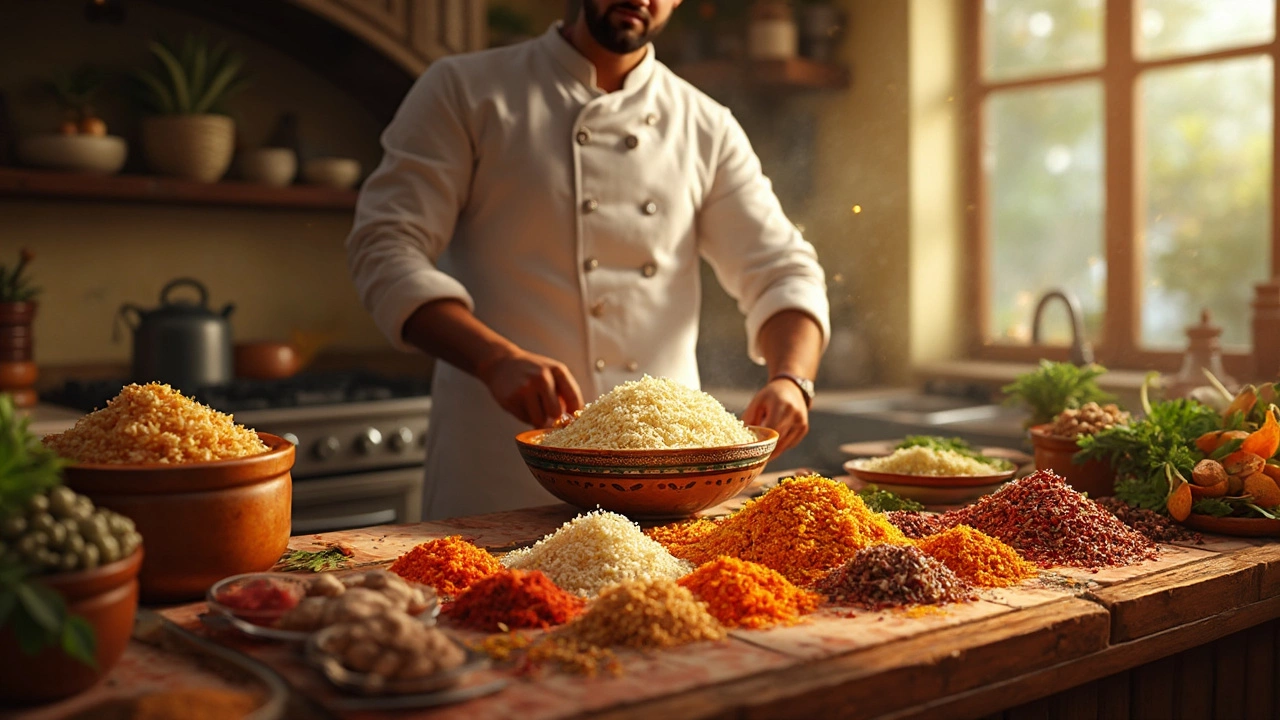
Biryani Rice: The Best Types, How to Pick, and Why It Makes or Breaks Your Biryani
When you're making biryani rice, a long-grain, aromatic rice variety essential for authentic Indian layered rice dishes. Also known as biryani rice, it's not just any rice—it's the foundation that holds together spices, meat, and steam in perfect harmony. Skip the wrong kind, and your biryani turns mushy, bland, or stuck together. Get it right, and each grain stays separate, fragrant, and full of flavor—exactly how it’s meant to be.
The best biryani rice is almost always basmati rice, a premium long-grain rice native to India and Pakistan, known for its nutty aroma and slender shape. It expands up to three times its length when cooked, soaking up spices without falling apart. You’ll find it in most of the posts here—like the one on perfect biryani—because no chef skips this step. But not all basmati is equal. Look for aged basmati (1–2 years old), which has less moisture and cooks fluffier. Fresh basmati? It’ll turn sticky. And don’t confuse it with jasmine rice—though both are fragrant, jasmine is shorter, softer, and better suited for Thai dishes, not Indian biryanis.
So what else matters? rice soaking, a simple step that reduces cooking time and ensures even texture. Most professional recipes, including those in our collection, call for soaking biryani rice for 30 minutes before cooking. It helps the grains absorb water evenly, so they cook at the same rate and don’t break during layering. Skip this, and you’ll end up with half-done centers or burnt bottoms. And while we’re on prep, rinse the rice until the water runs clear—this removes excess starch that causes clumping.
You’ll also notice in our posts that rice-to-water ratio, the exact amount of liquid needed to cook rice perfectly for biryani is never an afterthought. For biryani, you use less water than for regular rice—about 1.25 cups of water per cup of rice—because the dish finishes cooking with steam trapped under a lid. Too much water? Your biryani becomes a porridge. Too little? The bottom layer burns before the top gets tender.
There’s also the matter of grain length. Extra-long grain basmati gives you that signature elegant look and texture. Medium or short grain? Stick to risotto. Biryani needs length, not stickiness. And while you might see recipes calling for jasmine or even sona masoori in some regional versions, they’re exceptions—not the rule. The majority of trusted biryani recipes, from Hyderabad to Lucknow, rely on aged basmati because it delivers what no other rice can: fragrance, separation, and structure.
What you won’t find in our posts is a biryani made with instant rice, parboiled rice, or microwave packs. That’s not because they’re forbidden—it’s because they can’t replicate the texture, aroma, or soul of real biryani. This isn’t about tradition for tradition’s sake. It’s about physics and chemistry: how starch behaves, how steam moves, how heat travels through layered ingredients. The right rice makes those processes work.
Below, you’ll find posts that break down exactly how to choose, soak, rinse, and cook biryani rice for maximum impact. You’ll learn why some cooks parboil it halfway before layering, how moisture control affects the final steam, and what happens when you use the wrong pot. No fluff. Just what works.