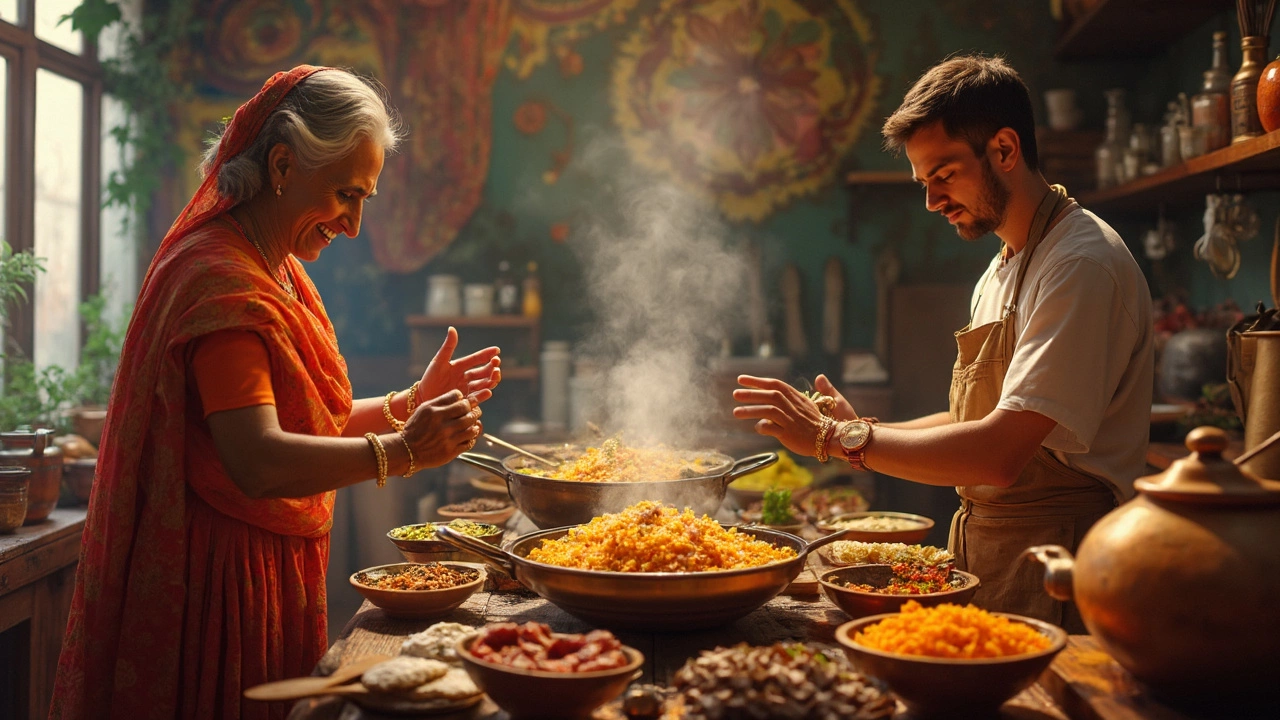
Biryani Origins: Where This Iconic Dish Really Came From
When you think of biryani, a layered rice dish with meat, spices, and saffron, deeply rooted in Indian culinary tradition. Also known as biryani rice, it’s not just a meal—it’s a cultural artifact shaped by empires, trade routes, and home kitchens. Many assume biryani is a single dish with one origin, but the truth is more layered than the rice itself. It emerged from the fusion of Persian cooking techniques and Indian ingredients during the Mughal era, when royal chefs in Delhi and Hyderabad began blending saffron-infused rice with slow-cooked meats, sealing the pot to trap steam and flavor. This method wasn’t just about taste—it was engineering. The sealed pot, called a dum, turned cooking into a science, preserving moisture and concentrating spice. That’s why real biryani doesn’t just taste rich—it feels rich, because every layer was meant to be experienced together.
What makes biryani different from similar rice dishes like pulao? It’s the layering. Pulao mixes everything in one pot. Biryani builds it in stages: par-cooked rice, spiced meat, fried onions, herbs, and sometimes hard-boiled eggs or potatoes, stacked like a cake. Then it’s sealed and steamed. This technique came from Persia, where polow was a royal dish. But in India, it got local. In Lucknow, they used delicate spices like kewra and mace. In Hyderabad, they added dried fruits and chili. In Kolkata, they even added potatoes—because why not? Each region made it their own, turning a royal dish into a street food staple. The spice blends, too, aren’t fixed. Some use garam masala. Others rely on whole spices fried in oil. Some add yogurt for tenderness. Others use saffron water for color. No two biryanis are the same, and that’s the point.
Why the Origin Story Matters Today
Knowing biryani origins isn’t just about history—it changes how you cook it. If you think it’s just about adding more chili or longer cooking time, you’re missing the real trick: balance. The rice must stay separate, the meat tender without falling apart, the spices layered, not drowned. That’s why so many home cooks fail. They skip the pre-cooking step. They don’t seal the pot. They use pre-ground spices instead of toasting whole ones. The recipes you see online often leave out these details because they assume you already know. But if you’ve ever made biryani that turned out mushy or bland, it’s not your fault—you were never told how the dish was meant to be built. The posts below show you exactly how the best versions are made, from the rice-to-meat ratios used in Hyderabad to the secret spice blends passed down in old families. You’ll find fixes for common mistakes, real ingredient lists, and the science behind why certain steps can’t be skipped. This isn’t about copying a recipe. It’s about understanding why the dish works the way it does—and then making it your own.