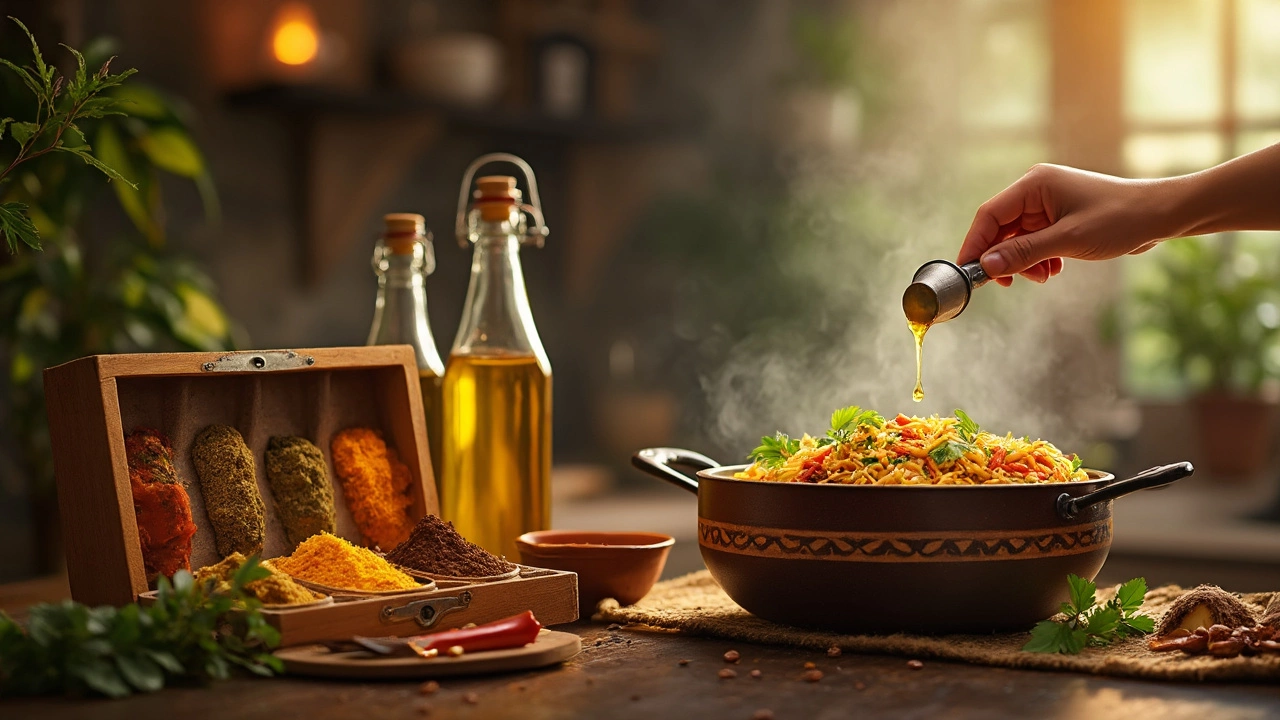
Biryani Oil: What It Is, Why It Matters, and How It Makes Biryani Perfect
When you think of biryani oil, a rich, aromatic cooking fat used to infuse flavor into layered rice dishes. Also known as biryani ghee or spiced oil, it’s not just a binder—it’s the silent hero that carries heat, fragrance, and depth into every grain of rice. This isn’t your average vegetable oil. It’s usually a blend of ghee, mustard oil, or sometimes coconut oil, slow-cooked with whole spices like cardamom, cloves, cinnamon, and bay leaves until the oil itself becomes a flavor bomb. In Indian kitchens, this oil is poured over rice before steaming, or drizzled between layers of meat and rice. Without it, biryani tastes flat—even if the spices are perfect.
What makes biryani oil special isn’t just what’s in it, but how it’s made. You don’t just pour oil into a pot and add spices—you heat it low and slow, letting the spices release their oils gradually. This process, called tempering or tadka, turns simple ingredients into something complex. The oil absorbs the volatile compounds from the spices that water can’t carry, which is why you never get the same depth from boiling spices in water. This is why restaurant biryanis taste richer than home versions—many use pre-made biryani oil stored in jars, reused and refreshed over time. Some even use a small amount of kewra water or rose water mixed into the oil for that signature floral lift.
Related to this is biryani spices, a curated mix of whole and ground aromatics that define regional styles. biryani masala varies from Hyderabad’s fiery red chili base to Lucknow’s subtle saffron and nutmeg profile. But none of it works without oil to carry those flavors deep into the rice. Then there’s ghee, clarified butter used as the base in most traditional biryani oils. Indian clarified butter has a higher smoke point than regular butter and a nutty richness that lingers on the palate. Even if you use vegetable oil, adding a spoonful of ghee at the end makes all the difference.
People often think biryani is about the meat or the rice, but it’s the oil that holds everything together. It keeps the rice from sticking, adds moisture without sogginess, and seals in steam during the dum cooking process. Skip the oil, and you get dry, separate grains. Use too much, and it turns greasy. Get it right, and every bite feels luxurious. That’s why home cooks who master their biryani oil recipe often become the go-to person for family gatherings.
Below, you’ll find real, tested advice from people who make biryani for a living or for their families every weekend. You’ll learn how to make your own biryani oil from scratch, what oils to avoid, how to store it, and why some chefs swear by mustard oil while others refuse to touch it. No fluff. Just what works.