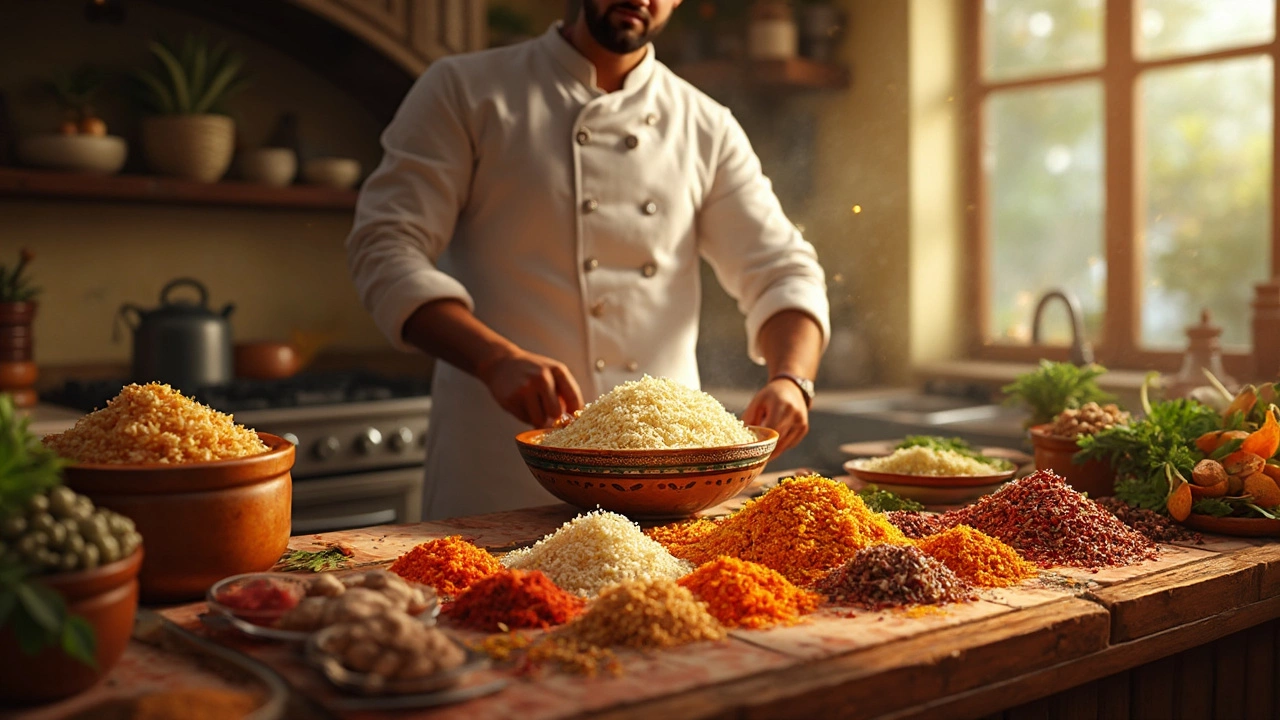
Best Rice for Biryani: Types, Traits, and Why It Matters
When you’re making biryani, the rice isn’t just a side—it’s the foundation. The right rice holds its shape, absorbs spices without turning mushy, and lets every grain stand out in that layered, fragrant pile. Not all rice is built for this. The best rice for biryani is long-grain, aromatic, and low in starch. Basmati rice, a premium long-grain rice native to the Indian subcontinent, known for its nutty aroma and elongated grains when cooked. Also known as Indian basmati, it’s the gold standard because it doesn’t stick, it fluffs, and it carries spice like a sponge carries flavor. You’ll find it in almost every authentic biryani recipe—from Hyderabad to Lucknow—because it’s the only rice that gives you that signature separation and fragrance.
Long grain rice, a category of rice with grains at least three to four times longer than they are wide, ideal for dishes requiring distinct, non-sticky texture is the broader category basmati belongs to. But not all long grain rice is basmati. Jasmine rice, for example, is fragrant but too soft and sticky for biryani. Parboiled rice? Too chewy. Short grain? Forget it—it turns into paste. The best rice for biryani needs to survive soaking, parboiling, and steaming without collapsing. That’s why grain length matters: longer grains mean less surface area to absorb too much water, so they stay firm. And aroma? That’s non-negotiable. Basmati’s natural scent, released when cooked, is what makes biryani smell like it’s been simmering for hours—even when it hasn’t.
Indian rice varieties, a diverse group of rice types grown across India’s regions, each suited to local climates and culinary traditions include others like Sona Masuri or Jeerakasala, but they’re rarely used for biryani. Why? Because they lack the punch. Basmati’s unique growing conditions—in the foothills of the Himalayas, with specific soil and water—give it a chemical profile that other rices just can’t copy. Even within basmati, there are grades: aged basmati is better than fresh, because aging reduces moisture and intensifies flavor. And soaking? Always soak it. Thirty minutes minimum. It’s the trick that keeps grains from breaking during cooking.
What you’re really looking for is texture, aroma, and resilience. You want rice that doesn’t turn into a blob when you add hot spices and meat. You want grains that stay separate, even after hours of steaming in a sealed pot. That’s the magic of the best rice for biryani. It’s not about being fancy—it’s about being functional. And in Indian kitchens, function always wins.
Below, you’ll find real, tested insights from people who make biryani for a living—and for their families. From soaking times to brand comparisons, from why aged rice matters to how to tell if your rice is truly basmati, these posts cut through the noise. No fluff. Just what works.