Can You Eat Beef in India? Legal, Cultural & Practical Guide
Explore India's complex beef laws, cultural attitudes, regional dishes, safety tips, and travel advice to know if you can eat beef safely across the country.
When you think of beef in India, meat from cattle raised and processed for human consumption. Also known as cow meat, it is a product that exists in India but is far from mainstream due to religious, legal, and cultural barriers. Unlike in the U.S. or Brazil, where beef is a daily staple, in India, it’s a tightly controlled product—available only in certain states, consumed by specific communities, and often hidden in plain sight. The word itself is avoided in many places, replaced with euphemisms like "buffalo meat" or "red meat." But make no mistake: beef is produced, sold, and eaten here, just not openly everywhere.
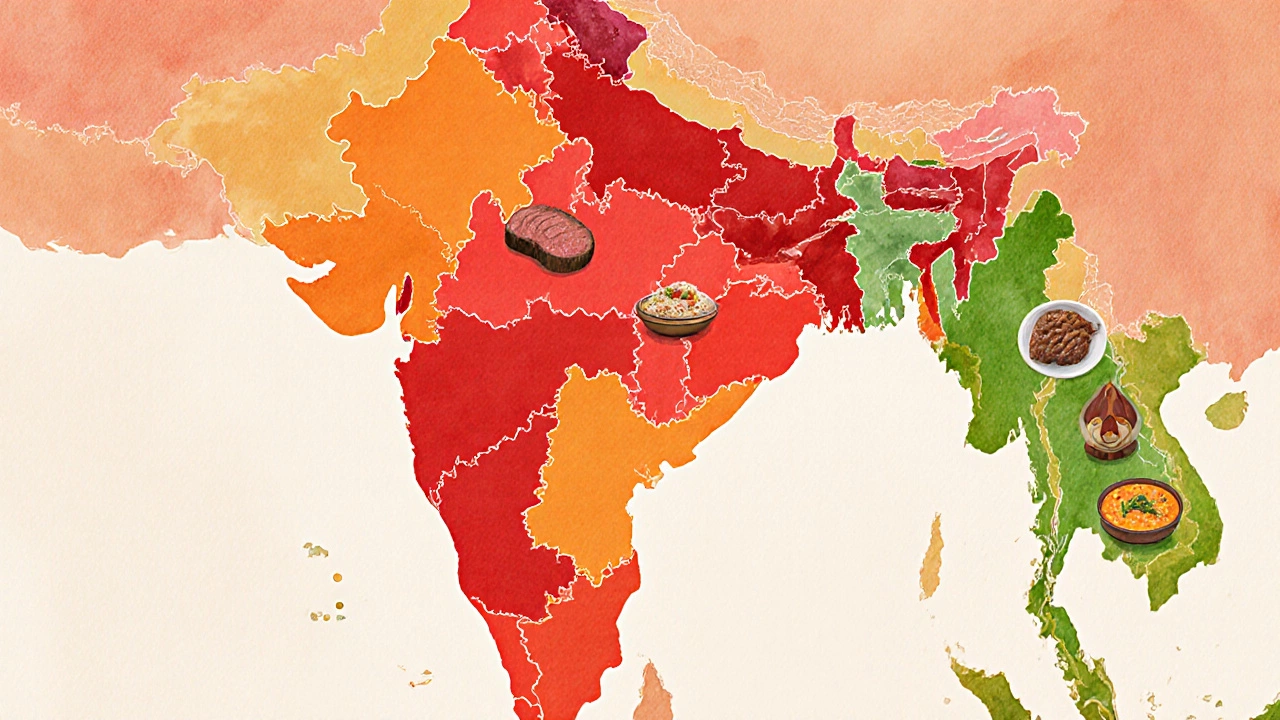
The legal landscape shapes everything. cow slaughter laws, state-level regulations that ban or restrict the killing of cows and bulls. Also known as bovine slaughter bans, these laws vary wildly—from total prohibition in states like Uttar Pradesh and Gujarat to full legality in Kerala, West Bengal, and the Northeast. In places where it’s allowed, the meat doesn’t come from dairy cows—it comes from water buffaloes, which make up over 90% of India’s beef exports. Buffalo meat is leaner, cheaper, and legally classified separately from cow meat, making it the real backbone of India’s beef industry. This isn’t just about religion; it’s about economics. India is the world’s top beef exporter by volume, and nearly all of it is buffalo meat shipped to countries like Vietnam, Egypt, and Malaysia.
What about the actual manufacturing? meat manufacturing India, the industrial process of slaughtering, processing, chilling, and packaging meat for domestic and international markets. Also known as red meat processing, it follows strict hygiene codes under FSSAI standards, just like any other food product. Facilities in states like Telangana, Andhra Pradesh, and Tamil Nadu operate like any modern meat plant: they use unit operations—chilling, cutting, vacuum packing, and cold storage—to ensure safety and shelf life. Workers wear gloves, use color-coded tools, and follow HACCP protocols. The meat is tested for pathogens, labeled clearly, and tracked through supply chains. But here’s the twist: these plants often don’t advertise what they’re making. Signs say "meat processing unit" or "export packer," never "beef."
So why does this matter to you? If you’re a food business owner, supplier, or curious consumer, understanding beef in India isn’t about politics—it’s about supply chains, regional demand, and hidden markets. You’ll find posts here that break down how meat is processed, what labels mean, and how export standards shape what ends up on your plate—even if you never see the word "beef" on it. Whether you’re sourcing meat, studying food systems, or just wondering why your curry doesn’t have beef, the answers are here—not in headlines, but in the quiet, regulated factories and markets where it’s actually made.
Explore India's complex beef laws, cultural attitudes, regional dishes, safety tips, and travel advice to know if you can eat beef safely across the country.