Bandhani Silk: The Tie-Dye Tradition Behind India's Most Beautiful Fabrics
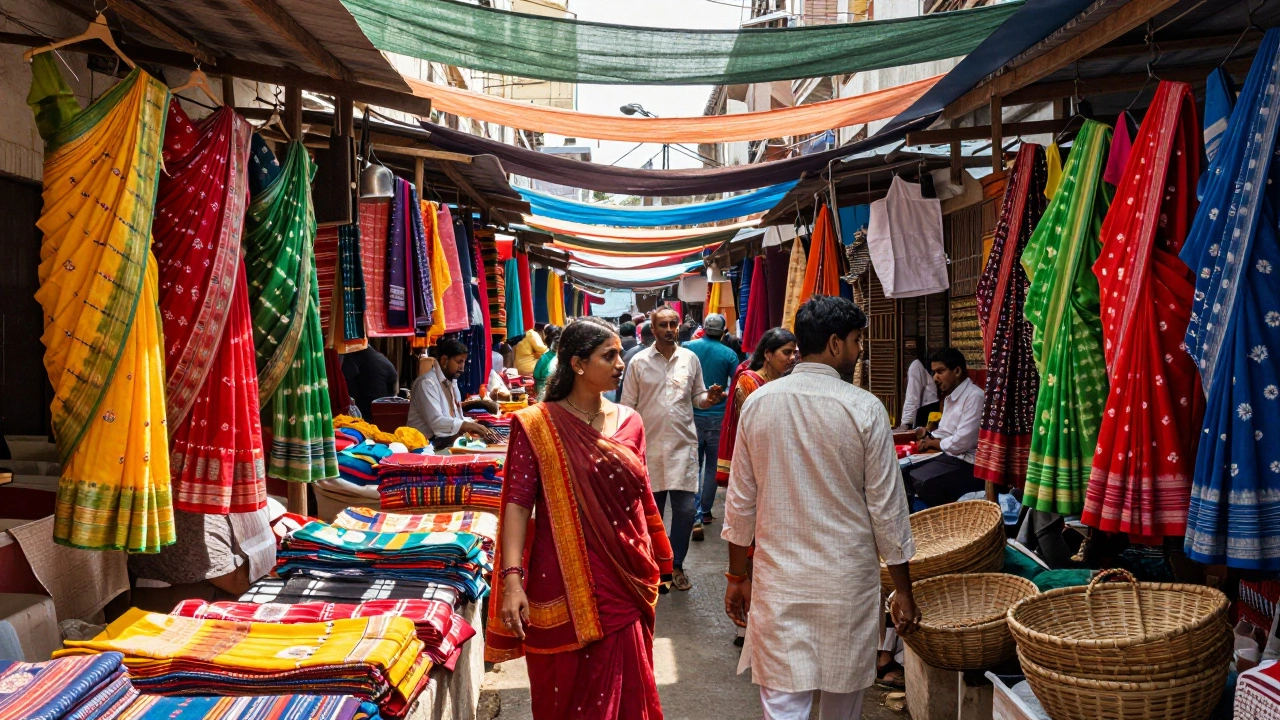
When you see a vibrant red or yellow sari with tiny dotted patterns, you’re looking at Bandhani silk, a traditional Indian textile made by tying tiny knots in fabric before dyeing it to create intricate patterns. Also known as tie-dye silk, this craft has been passed down for centuries in Gujarat and Rajasthan, where women still tie each dot by hand using their nails. Unlike machine-made prints, every Bandhani piece is unique—no two sets of knots are exactly alike. The process demands patience, precision, and years of practice. A single sari can take days to tie, then weeks to dye in layers, with each color applied one at a time to avoid bleeding.
Bandhani silk isn’t just fabric—it’s tied to rituals. Brides in western India wear it on their wedding day, often in shades of red, yellow, and orange, because each color carries meaning: red for prosperity, yellow for new beginnings. The same technique is used on dupattas, turbans, and even men’s sherwanis. The craft thrives in places like Jaipur, Bhuj, and Jamnagar, where families run small workshops passed from mother to daughter. You won’t find Bandhani in fast fashion stores—it’s made slowly, using natural dyes from indigo, turmeric, or pomegranate rind, and woven on handlooms that have stood for generations.
What makes Bandhani silk different from other tie-dye fabrics? It’s the scale. The dots are smaller than a grain of rice, and hundreds of thousands are tied per garment. This level of detail means it’s not just art—it’s engineering. Each knot must hold tight during dyeing, or the pattern blurs. That’s why skilled artisans can spend months on one piece. The fabric itself is usually silk or cotton-silk blend, chosen for how well it holds dye and drapes. Even today, when synthetic dyes are cheaper, many weavers stick to natural ones because they last longer and feel softer against the skin.
Bandhani silk connects to larger stories—of rural livelihoods, cultural identity, and slow craftsmanship in a world rushing toward mass production. It’s the same spirit you see in handmade paneer, slow-fermented dosa batter, or biryani layered by hand. These aren’t just recipes or products—they’re traditions kept alive by people who refuse to cut corners. The posts below dive into the hidden details of Indian food and textile crafts, showing how patience, technique, and local knowledge shape what we use every day. Whether you’re curious about how silk is dyed or how a simple knot can carry centuries of meaning, you’ll find real stories here—not marketing fluff, just the facts behind the beauty.