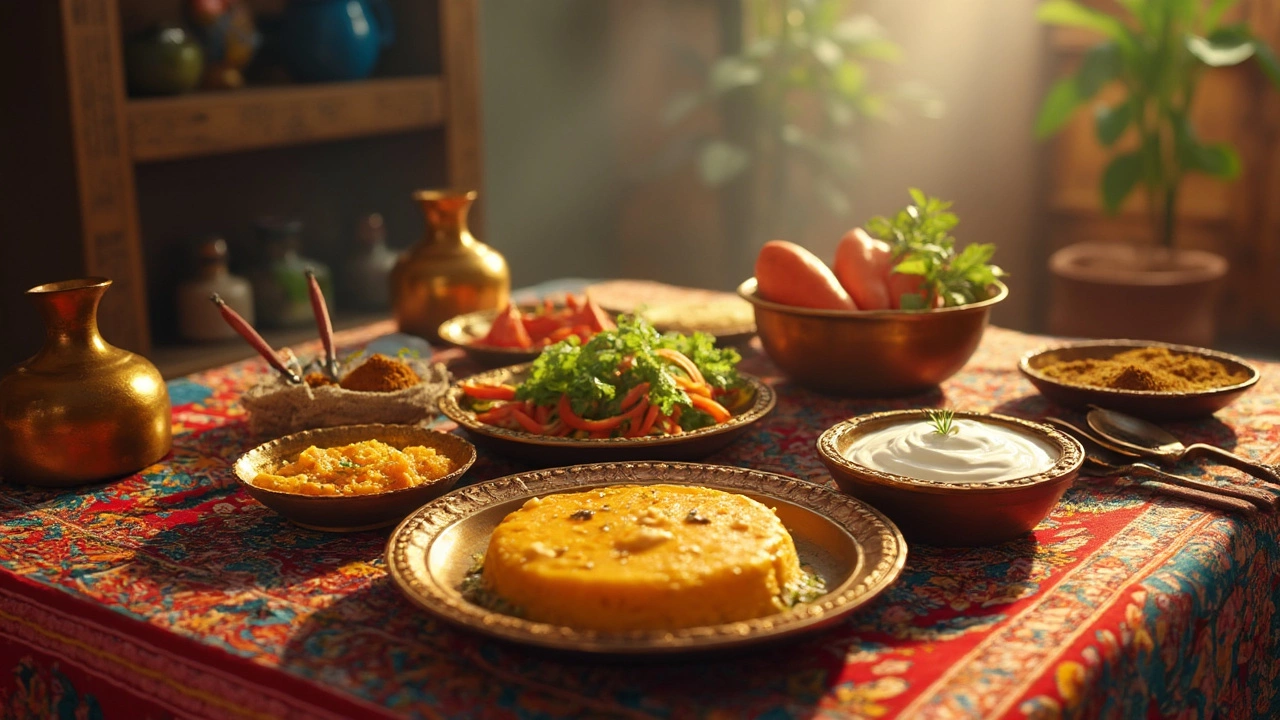
Ayurveda in Indian Food Manufacturing: Traditional Wisdom Meets Modern Production
When you eat a bowl of kitchari or sip warm turmeric milk in India, you're not just having a meal—you're engaging with Ayurveda, an ancient Indian system of holistic health that links food, body, and balance. Also known as the science of life, it doesn’t just treat illness—it prevents it through daily eating habits, seasonal routines, and ingredient pairings that have been refined over thousands of years. This isn’t folklore. It’s a living framework that still guides how food is made, stored, and served across thousands of Indian kitchens and manufacturing units today.
Ayurveda doesn’t treat food as mere calories. It classifies ingredients by their guna, qualities like heavy, light, hot, or cold, and how they interact with your body type—dosha, the three biological energies: Vata, Pitta, and Kapha. A spice like cumin isn’t just for flavor; it’s chosen because it’s warming and aids digestion, especially for people with a Kapha imbalance. Manufacturers in India who follow Ayurvedic principles don’t just add turmeric for color—they use it because its anti-inflammatory properties align with traditional wellness goals. Even something as simple as soaking urad dal before making dosa? That’s not just fermentation—it’s an Ayurvedic step to make the legume easier to digest and reduce gas, a detail many modern food labs now validate with microbiology.
Look at how paneer is made. Soaking it before cooking? That’s not a chef’s trick—it’s Ayurveda in action. Cold, hard paneer is considered heavy and hard to digest; soaking softens it and brings it into balance. The same goes for using asafoetida instead of garlic in many dishes—Ayurveda says garlic can overstimulate Pitta, so alternatives are used to keep meals calming and balanced. Even the way Indian restaurants thicken curry with slow-cooked onions and tomatoes? That’s not just technique—it’s Ayurvedic food processing: reducing moisture, concentrating flavors, and making nutrients more bioavailable. These aren’t random practices. They’re time-tested methods that modern food science is only now catching up to.
You won’t find Ayurveda listed on every food label, but you’ll feel its influence in every spice blend, every fermented batter, every grain cooked with ghee. It’s the quiet backbone of India’s food manufacturing—where safety, taste, and well-being aren’t separate goals, but one unified system. Below, you’ll find real-world examples of how this ancient system shows up in everyday food production: from dosa batter timing to paneer texture tricks, from herbal preservatives to why roti doesn’t need baking powder. These aren’t just recipes. They’re pieces of a 5,000-year-old food code still running strong today.