Strongest Wood in India: Top Hardwoods for Furniture & Construction
Indian Hardwood Selector
Select a project type or specific wood to see detailed comparisons. Strength isn't just about hardness; it's about matching the wood to the job.
Expert Recommendation
You walk into a furniture showroom in Mumbai or Delhi, and the salesperson tries to sell you on "premium teak." But is it actually the strongest? Or are they just banking on its popularity? Here’s the truth: strength isn’t a single number. It’s about what you’re building. A chair needs different wood than a bridge beam. If you want the absolute hardest wood available in India, Sissoo often beats Teak on paper. But if you want the most durable all-rounder that won’t warp in monsoon humidity, Teak remains king.
Most people confuse hardness with durability. They aren’t the same. Hardness (measured by the Janka scale) tells you how well the wood resists dents and scratches. Durability tells you how well it fights rot, termites, and weather. In India, where humidity swings from 20% to 90%, choosing the wrong wood can mean your expensive table splits within two years. Let’s break down which woods actually hold up under Indian conditions, not just in a lab.
Understanding Wood Strength: The Metrics That Matter
Before we name names, you need to know what "strong" means. You’ll hear three terms thrown around at lumber yards:
- Janka Hardness: This measures force needed to embed a steel ball halfway into the wood. Higher number = harder surface. Good for floors and tabletops.
- Modulus of Rupture (MOR): How much weight the wood can take before it snaps. Critical for beams, shelves, and structural frames.
- Natural Resistance: Does it have oils or tannins that repel termites and fungus? In tropical climates, this matters more than hardness.
A wood can be incredibly hard but brittle (like some dense eucalyptus variants). It can also be soft but tough (like Pine, though rare in high-end Indian furniture). The sweet spot for most homeowners is balancing MOR with natural resistance.
The Heavyweights: Sissoo, Sal, and Ironwood
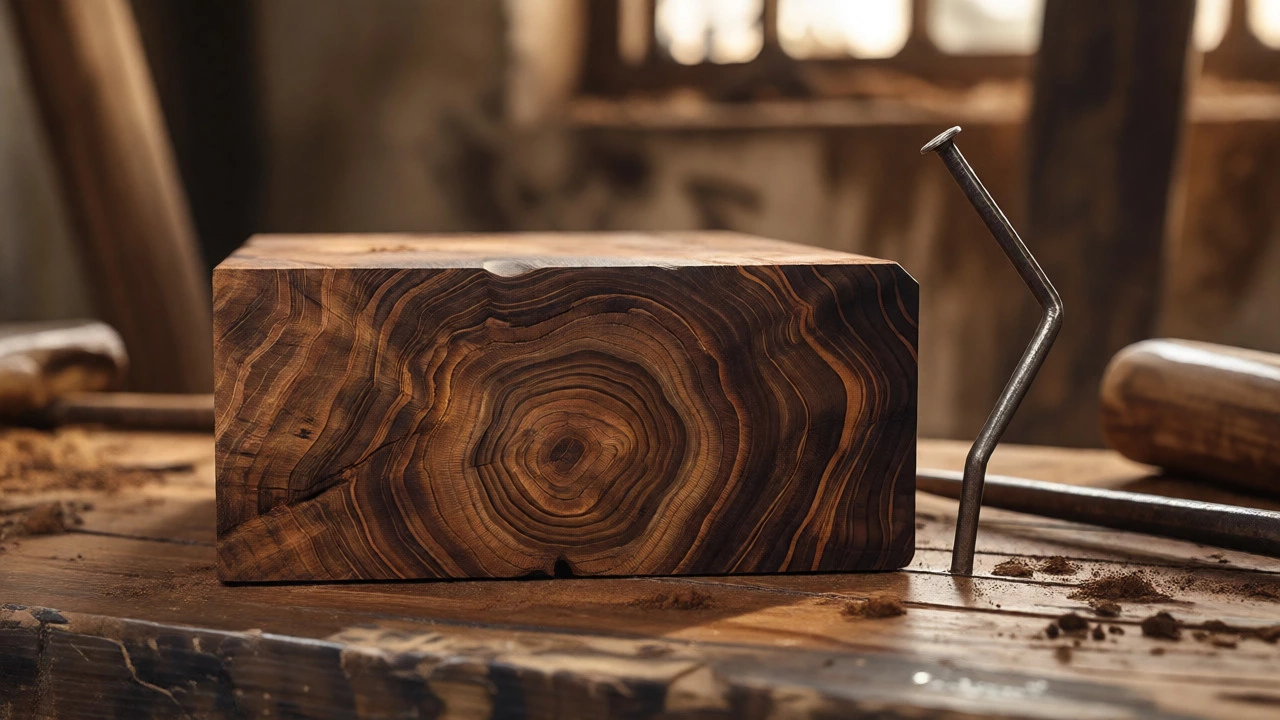
If we strictly follow the Janka scale, Sissoo (Dalbergia sissoo) is one of the toughest natives. Native to northern India, it has a Janka rating of around 2,480 lbf. For context, Oak is roughly 1,360 lbf. Sissoo is so dense that nails often bend when you try to hammer them in. It’s heavy, dark, and has a beautiful grain. However, it’s prone to warping if not dried properly. Many manufacturers avoid it because it cracks during seasoning. But if you find a well-seasoned piece, it will outlast you.
Then there’s Sal (Shorea robusta). Found across central and eastern India, Sal is the backbone of Indian railways and construction. Its Janka rating is lower than Sissoo, but its Modulus of Rupture is exceptional. It doesn’t snap easily. It bends slightly under load rather than breaking. This makes it ideal for structural beams, rafters, and heavy-duty outdoor benches. Sal contains natural resins that resist decay, making it a favorite for temple structures that have stood for centuries.
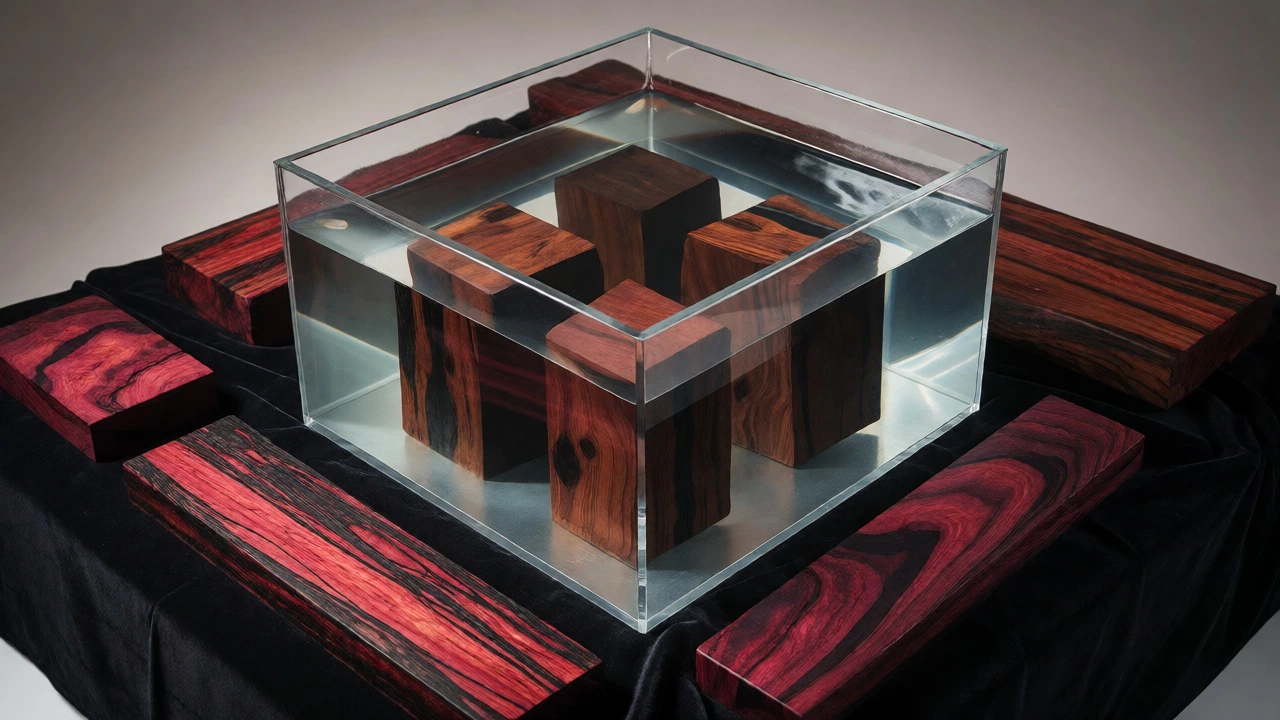
Don’t forget Ironwood (Mesua ferrea), known locally as Nagasam or Ceylon Ironwood. True to its name, it sinks in water. With a Janka rating exceeding 3,000 lbf, it’s nearly impossible to dent. But here’s the catch: it’s extremely difficult to work with. It dulls saw blades quickly and requires expert carpentry. You rarely see full tables made of Ironwood; it’s mostly used for tool handles, flooring blocks, and decorative inlays.
The Popular Choice: Why Teak Still Dominates
When people ask for the strongest wood, they usually mean "the best wood for my living room." And for that, Teak (Tectona grandis) is still the gold standard. Why? Because it balances strength with stability. Teak has a Janka rating of about 1,070 lbf-softer than Sissoo-but it contains natural oils that make it waterproof and termite-proof.
In coastal cities like Chennai or Kochi, salt air destroys lesser woods. Teak thrives there. It doesn’t swell or shrink drastically with humidity changes. This dimensional stability is why shipbuilders have used it for centuries. If you buy a Teak dining table today, it might look matte after five years, but it won’t crack. You can sand it down, and it looks new. Sissoo might chip; Sal might stain unevenly. Teak forgives.
| Wood Type | Janka Hardness (lbf) | Best Use Case | Termite Resistance | Workability |
|---|---|---|---|---|
| Sissoo | ~2,480 | Flooring, Heavy Tables | Moderate | Difficult (Prone to Cracking) |
| Sal | ~1,500 | Structural Beams, Outdoor | High | Moderate |
| Teak | ~1,070 | Furniture, Boats, Doors | Excellent | Easy |
| Ironwood | ~3,000+ | Tool Handles, Inlays | Excellent | Very Difficult |
| Rosewood | ~2,440 | Luxury Cabinets, Carving | High | Moderate |
Regional Powerhouses: Rosewood and Mahogany
India produces world-class Rosewood (Dalbergia latifolia), specifically Indian Rosewood or Sonokoth. It’s denser than Teak and has a rich, reddish-brown color. Musicians prize it for guitar fretboards because it’s hard enough to withstand string friction. For furniture, it’s luxurious but expensive. It’s strong, but it’s often reserved for veneers and carvings because large solid slabs are costly and legally restricted due to conservation laws.
Indian Mahogany (Swietenia mahagoni - often imported or plantation-grown) is another contender. While technically softer than Sissoo, it’s incredibly stable. It doesn’t twist. For cabinet doors and drawer fronts where precision matters, Mahogany is stronger in practical application than harder woods that warp.
Common Pitfalls When Buying "Strong" Wood
Manufacturers love using marketing terms that don’t mean anything. Here’s how to spot the fakes:
- "Solid Wood" vs. "Hardwood": Just because it’s called hardwood doesn’t mean it’s strong. Rubberwood (Hevea brasiliensis) is a popular sustainable option in Kerala. It’s decently strong but absorbs moisture easily. It’s fine for indoor chairs but terrible for outdoor patios.
- Seasoning Matters More Than Species: Green (unseasoned) Teak is weaker than well-dried Sissoo. Always ask for kiln-dried wood with moisture content below 12%. If a seller says "it’s fresh cut," run away.
- Engineered Wood Tricks: Some "solid wood" tables are plywood cores with a thin veneer. Check the edges. If you see layers, it’s not solid. Solid wood ends show end-grain rings.
How to Choose the Right Wood for Your Project
Stop looking for one "best" wood. Match the wood to the job:
- For Flooring: Go with Sissoo or Ironwood. They resist foot traffic dents. Avoid soft pines.
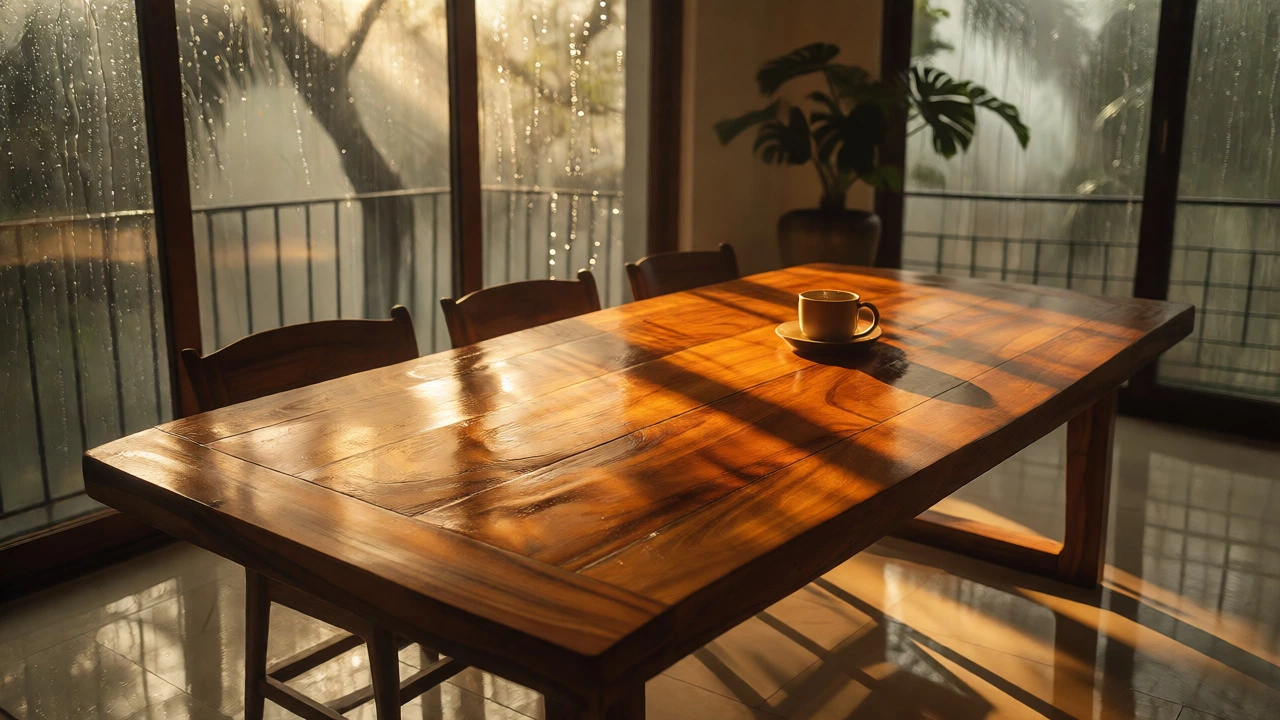
- For Dining Tables: Teak is safest. It handles spills and heat better. If you want a statement piece and don’t mind maintenance, Rosewood offers superior hardness.
- For Outdoor Furniture: Sal or Teak. Both have natural oils. Avoid untreated Sissoo outdoors-it may split.
- For Bookshelves: You need stiffness, not just hardness. Sal or Acacia works well. Acacia is cheaper and quite hard, but watch for warping.
Care Tips to Maximize Lifespan
Even the strongest wood fails without care. In India’s humid climate, apply beeswax or tung oil every six months. Never place hot pots directly on wood surfaces; use trivets. Keep furniture away from direct sunlight, which fades Teak and dries out Rosewood. Dust regularly with a dry cloth; wet cloths trap moisture against the grain.
Is Teak stronger than Sal?
No, Sal is generally harder and has higher structural strength (Modulus of Rupture) than Teak. However, Teak is more dimensionally stable and resistant to moisture, making it better for finished furniture. Sal is preferred for structural beams and outdoor uses where raw strength matters more than finish quality.
Which is the hardest wood found in India?
Ironwood (Nagasam/Mesua ferrea) is typically the hardest, with a Janka rating over 3,000 lbf. Sissoo is also extremely hard (approx. 2,480 lbf) and more commonly used in commercial furniture than Ironwood, which is too difficult to work with for large pieces.
Does Sissoo wood attract termites?
Sissoo has moderate natural resistance to termites compared to Teak or Sal. It is susceptible to insect attack if not treated or kept dry. Regular polishing and keeping the wood dry helps maintain its resistance.
Why is Teak considered the best for furniture despite being softer?
Teak contains natural oils and silica that make it highly resistant to water, rot, and termites. It also has low shrinkage, meaning it doesn't warp or crack easily in changing humidity levels common in India. This durability and stability outweigh its lower hardness score for most indoor applications.
Is Acacia wood strong enough for dining tables?
Yes, Acacia is quite hard (Janka ~1,700 lbf) and durable. It is a cost-effective alternative to Teak for dining tables. However, it can be prone to warping if not properly sealed, so ensure it is kiln-dried and finished with a good sealant.