How to Invest in TSMC from India: A Step-by-Step Guide
TSMC Investment & LRS Calculator
Estimated USD Value
$0.00
Estimated Shares
0 Shares
Note: This tool provides estimates. Actual costs may vary based on brokerage commissions, FX markup fees, and real-time market fluctuations.
Key Takeaways for Indian Investors
- Direct investment requires an international brokerage account.
- ADRs (American Depositary Receipts) are the most common way for Indians to buy TSMC.
- LRS limits set by the Reserve Bank of India govern how much you can send abroad.
- Mutual funds and ETFs provide a lower-barrier entry point.
The ADR Route: The Easiest Entry Point
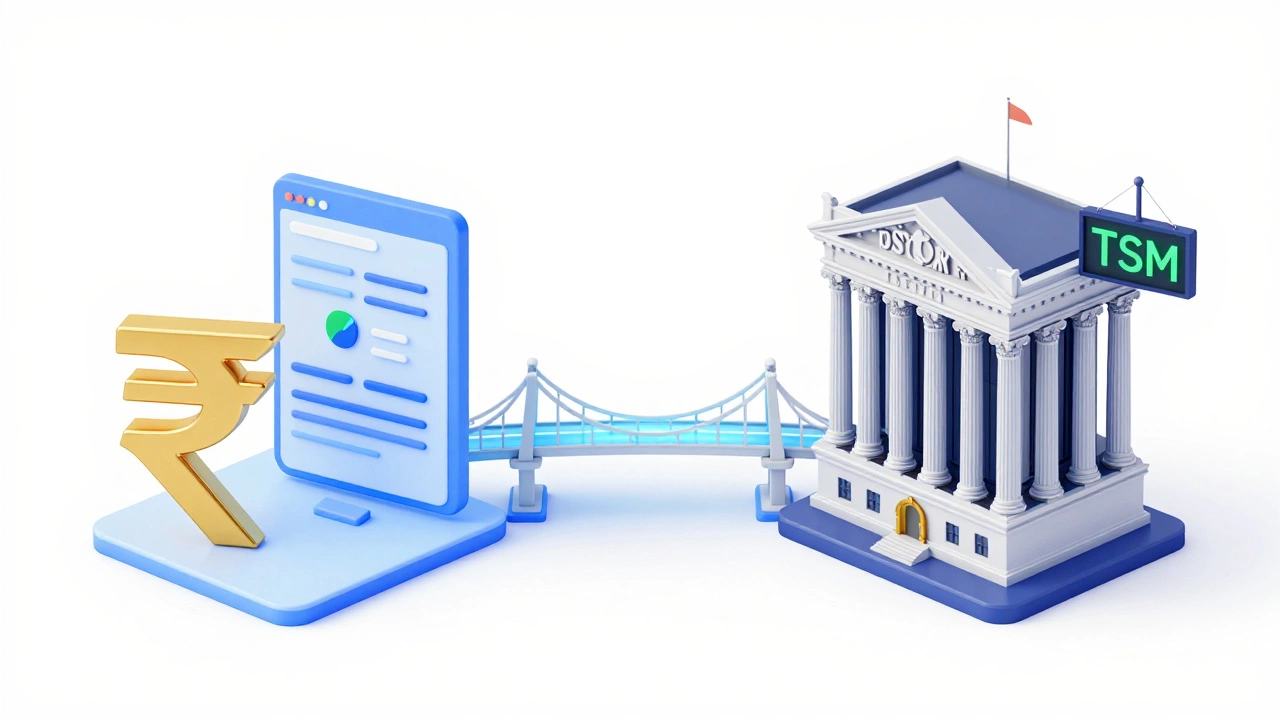
Since TSMC is based in Taiwan, buying shares directly on the Taiwan Stock Exchange (TWSE) is a nightmare for most retail investors. Instead, most people use ADRs is American Depositary Receipts, which are certificates issued by a US bank representing shares in a foreign company. TSMC lists these on the New York Stock Exchange (NYSE) under the ticker TSM.
When you buy a TSM ADR, you aren't buying a different company; you're buying a receipt that represents the underlying shares in Taiwan. It's the most liquid way to trade the stock. You don't have to worry about Taiwanese tax laws or currency conversion for every single trade because everything is handled in US Dollars (USD). For a regular person in India, this is the gold standard for accessibility.
Setting Up Your International Brokerage
To buy those ADRs, you need a bridge between your Indian bank account and the US markets. You have two main choices: traditional Indian brokers with global arms or dedicated international platforms.
Many Indian fintech apps now offer "US Stocks" sections. They handle the plumbing behind the scenes. You transfer rupees, they convert it to dollars, and you buy the shares. However, if you're planning to invest a significant amount, you might look at specialized platforms like Interactive Brokers. These give you more control over your portfolio and often lower commissions, though the onboarding process is a bit more rigorous.
| Method | Ease of Setup | Cost/Fees | Control |
|---|---|---|---|
| US-based Broker/App | Very High | Moderate (FX Fees) | Medium |
| International Broker | Medium | Low | High |
| Index Funds/ETFs | High | Annual Expense Ratio | Low |
Navigating the RBI and LRS Rules
You can't just send unlimited money out of India. The Reserve Bank of India is the central banking institution of India that regulates the monetary policy and foreign exchange. They have a rule called the Liberalised Remittance Scheme (LRS).
As of now, the LRS allows individual Indian residents to remit up to $250,000 per financial year. This includes your investment in TSMC, as well as travel, gifts, or education expenses. If you plan to invest in TSMC from India with a large sum, keep this limit in mind. Your bank will ask for a purpose code for the transfer-usually "Investment in Equity Shares"-to ensure the money is moving legally.
The Passive Approach: ETFs and Mutual Funds
If the idea of opening a US brokerage account feels like too much work, or if you're worried about putting all your eggs in one basket, look at ETFs is Exchange Traded Funds that track a specific index or sector, such as semiconductors.
There are several semiconductor-focused ETFs (like the SMH or SOXX) that have massive holdings in TSMC. By buying one share of an ETF, you're essentially owning a tiny slice of TSMC, NVIDIA, and Broadcom all at once. This reduces your risk. If TSMC has a bad quarter but NVIDIA booms, your portfolio stays balanced. You can access these ETFs through the same international brokerage accounts mentioned earlier.
Taxes: The Part Nobody Likes
Investing abroad means you're dealing with two tax jurisdictions. First, there's the US. Since TSM is traded as an ADR, the US government may withhold taxes on dividends. This is where the Double Taxation Avoidance Agreement (DTAA) comes into play. India and the US have an agreement to prevent you from paying full tax on the same income in both countries.
In India, your gains from TSMC shares are treated as capital gains. If you hold the stock for more than 24 months, it's usually considered a Long-Term Capital Gain (LTCG). If you sell before that, it's Short-Term (STCG) and taxed at your normal income slab. You must disclose these foreign assets in the "Foreign Assets (FA)" schedule of your Income Tax Return (ITR). Forgetting this can lead to heavy penalties under the Black Money Act, so don't skip this step.
Common Pitfalls to Avoid
Don't ignore the exchange rate. When you buy TSMC, you're not just betting on chips; you're betting on the USD/INR exchange rate. If the Dollar gets stronger against the Rupee, your investment value increases even if the stock price stays flat. Conversely, if the Rupee strengthens, it can eat into your profits.
Another mistake is ignoring the geopolitical risk. TSMC is the heart of the global tech economy, but it's physically located in Taiwan. Any tension in the Taiwan Strait can cause the stock to swing wildly. It's a high-reward play, but it comes with a specific kind of political volatility that domestic Indian stocks don't have.
Is it legal for an Indian citizen to buy US stocks?
Yes, it is completely legal as long as you follow the Reserve Bank of India's Liberalised Remittance Scheme (LRS) guidelines, which currently limit outward remittances to $250,000 per year.
Can I buy TSMC through Zerodha or Groww?
Many Indian brokers now offer US stock investing, but they often partner with a US-based broker to facilitate the trade. Check your specific app's "Global" or "US Stocks" section to see if TSM is available.
What is the difference between TSM and the shares in Taiwan?
TSM is the ticker for the American Depositary Receipt (ADR) listed on the NYSE. The shares in Taiwan are the original equity. For most Indian investors, the ADR is the only practical way to invest due to accessibility and liquidity.
Do I need a separate bank account in the US?
No, you don't need a US bank account. Most international brokers provide a virtual account or allow you to wire money directly from your Indian bank via SWIFT.
How are dividends from TSMC taxed in India?
Dividends are taxed as "Income from Other Sources" at your applicable income tax slab rate. You can usually claim a credit for the taxes withheld in the US using the DTAA.
Next Steps for Getting Started
If you're ready to move forward, start by checking your passport and PAN card-you'll need these for any KYC process with a global broker. Once your documents are ready, decide if you want the direct control of a single stock (ADRs) or the diversified safety of a semiconductor ETF.
For those who are cautious, a good strategy is to start with a small amount-perhaps $100 to $500-just to see how the fund transfer and trading platform work. Once you're comfortable with the flow of money and the tax reporting requirements, you can scale up your position in the world's most important chipmaker.