Do People from India Eat Sweets? The Real Story Behind Indian Sweets
Indian Sweet Sugar Calculator
How Much Sugar Are You Really Consuming?
Indian sweets aren't just desserts—they're part of daily life. This tool helps you understand your annual sugar intake from traditional sweets based on your consumption habits.
Select Your Sweet Preferences
Your Estimated Annual Sugar Intake
kilograms of sugar per year
WHO recommends 25g of added sugar daily (about 9 teaspoons).
Your intake is within safe limits.
Important Context
Indian sweets are part of cultural traditions and daily life. While sugar content varies, remember:
- Traditional sweets often use jaggery or coconut sugar instead of white sugar
- Portion sizes are typically small (1-2 pieces)
- Many families now use healthier alternatives like coconut milk or stevia
- Intake is often seasonal rather than constant daily consumption
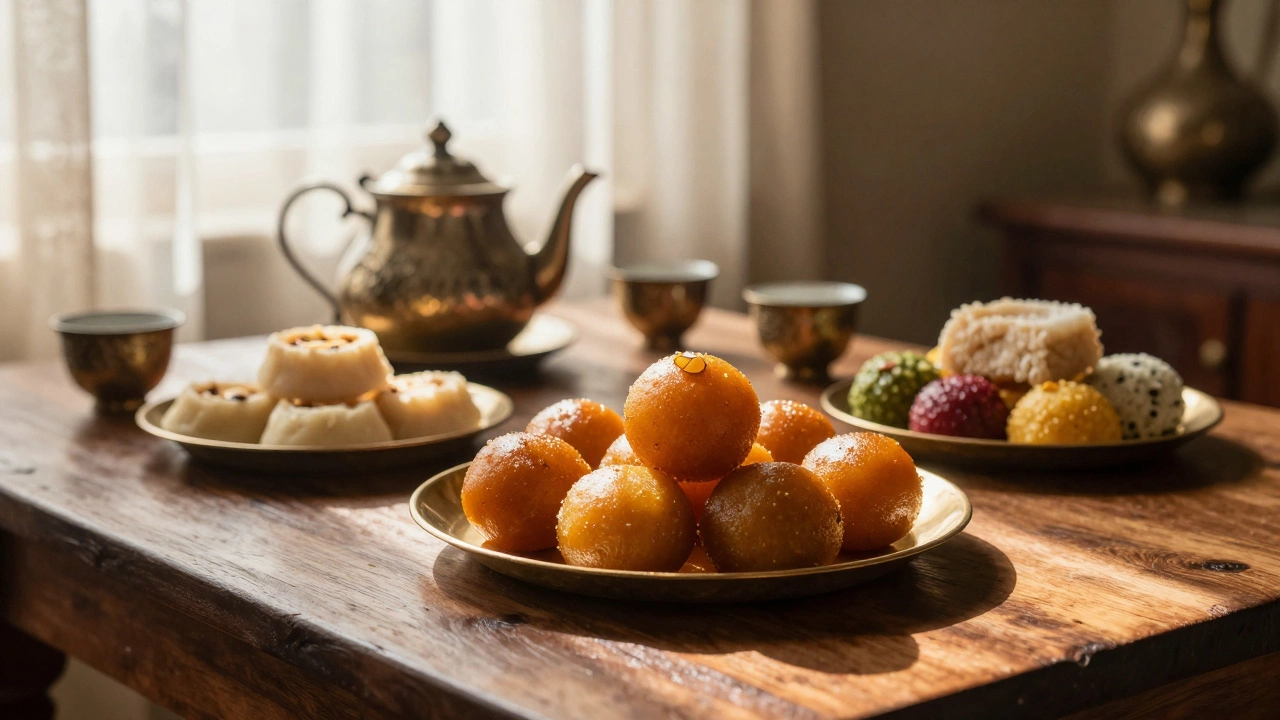
Yes, people from India eat sweets-constantly. Not just on holidays, not just for guests, but as part of daily life. If you’ve ever walked into a home in Mumbai, Delhi, or a small village in Odisha, you’ve probably seen a plate of sweets sitting out, untouched, waiting. It’s not decoration. It’s tradition. It’s hospitality. It’s joy made edible.
Sweets Are Part of the Rhythm of Life
In India, sweets aren’t desserts you eat after dinner. They’re milestones. A baby’s first bite? A spoonful of gur (jaggery) mixed with rice. A wedding? Laddoos, barfis, and jalebis laid out in dozens. A funeral? A small box of milk-based sweets shared with mourners as a symbol of life continuing. Even a simple visit to a neighbor’s house often comes with a plate of halwa or peda. You don’t ask why. You just accept it.
It’s not about sugar addiction. It’s about meaning. In Hindu culture, offering something sweet is a way of blessing. The word for sweet in Sanskrit, mishri, is also used to describe something pure, divine, or auspicious. When you give sweets, you’re giving good fortune.
What Do They Actually Eat?
Indian sweets aren’t just one thing. They’re hundreds. Each region has its own signature. In the north, you’ll find gulab jamun-soft, fried dough balls soaked in syrup. In the south, payasam (kheer) made with rice, milk, and cardamom. In the west, shrikhand-strained yogurt sweetened with sugar and saffron. In the east, rasgulla, spongy cheese balls that melt in your mouth.
Most are made from simple ingredients: milk, sugar, flour, ghee, nuts, and spices like cardamom, saffron, or rosewater. No artificial flavors. No preservatives. That’s why they’re often made fresh daily. You won’t find a packaged ladoo that tastes like the one your grandmother made.
Some sweets are seasonal. During Diwali, karjikay (fried pastry filled with coconut) floods homes in Karnataka. In Holi, gujiya-crescent-shaped pastries stuffed with khoya and dried fruit-are everywhere. During Ramadan, Muslims in India make sheer khurma, a rich vermicelli pudding with milk, dates, and nuts.
They’re Not Just for Celebrations
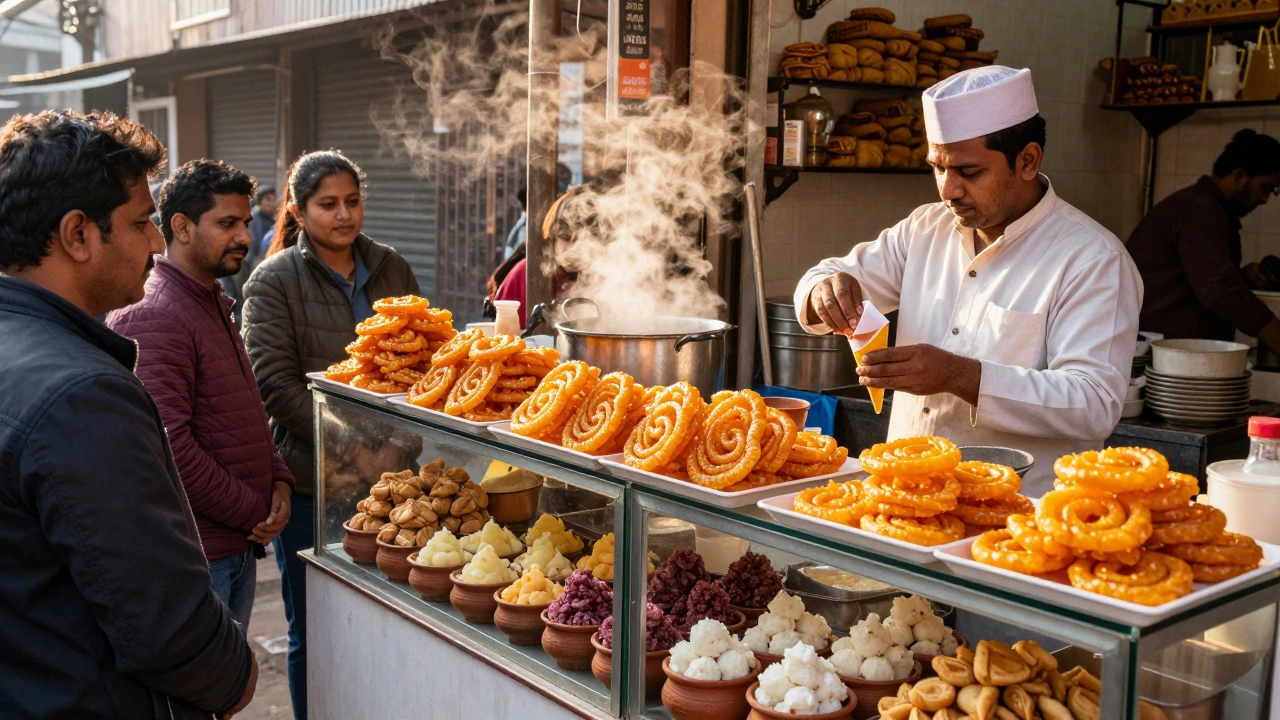
People don’t wait for festivals to eat sweets. In many households, a small piece of chikki (a brittle made of jaggery and peanuts) is given to kids after school. Office workers in Bangalore snack on barfi with afternoon tea. In rural areas, farmers eat gur balls for quick energy before heading to the fields.
There’s even a saying: “Mitha khaao, dushman banao”-Eat something sweet, make an enemy. It’s not about being mean. It’s about how sweet food softens tension. Offering sweets can defuse an argument, welcome a stranger, or mend a broken relationship.
How Much Do They Actually Eat?
India consumes over 3 million metric tons of sweets every year. That’s more than 2 kilograms per person annually. Compare that to the U.S., where per capita sugar consumption is around 25 kilograms-but much of it comes from soda and processed snacks. In India, nearly all of that sugar comes from traditional sweets made at home or by local sweet shops called mithai stores.
And it’s not just urban. In villages, families often make sweets in bulk once a week. A single batch of peda can feed 15 people. No one eats a whole plate alone. It’s shared. That’s why portion sizes are small, but frequency is high.
Health Concerns? Yes. But It’s Not That Simple
Diabetes rates in India are rising. So are concerns about sugar. But cutting out sweets isn’t easy-because they’re not just food. They’re memory. A child’s first taste of rasgulla might be from their aunt’s hands. A widow might make kheer every Friday because it’s what her husband loved.
Many families now make healthier versions: using jaggery instead of white sugar, coconut milk instead of dairy, or reducing oil in frying. Some shops now sell sugar-free gulab jamun made with stevia. But the taste? It’s not the same. People still choose the real thing.
The Sweet Shop Culture
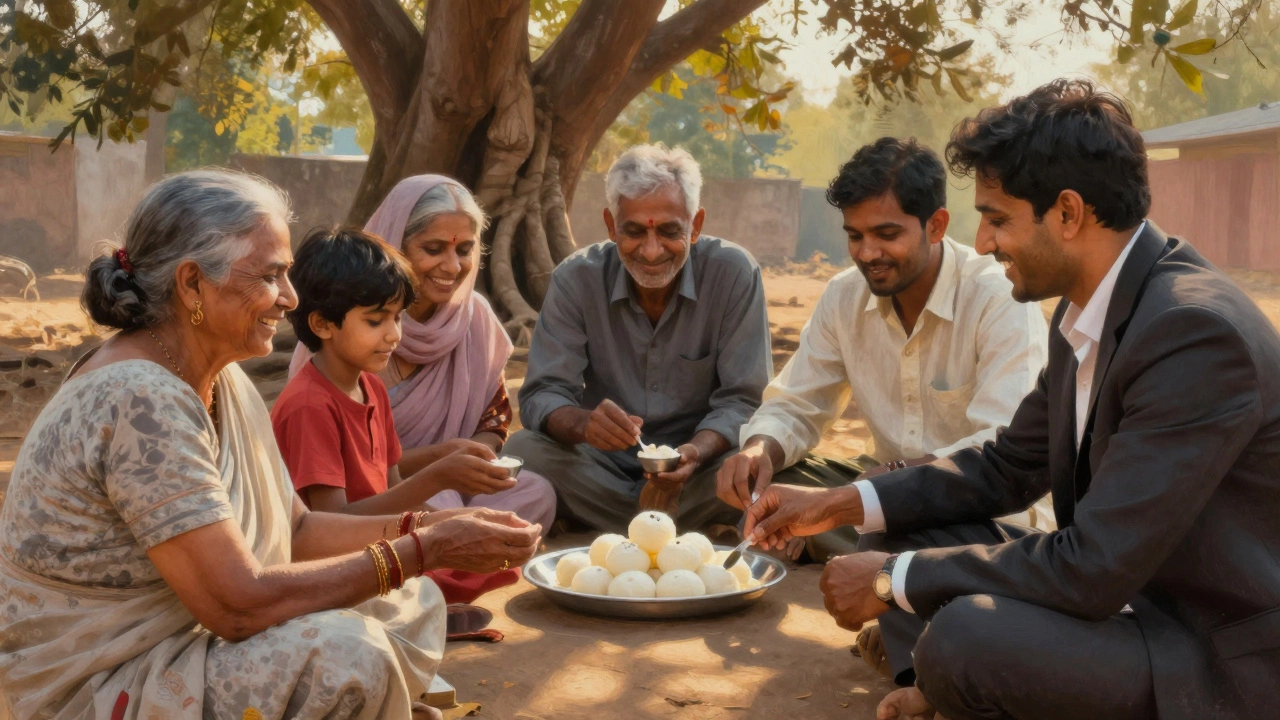
Every town, no matter how small, has a mithai shop. These aren’t fancy stores. They’re often just a counter with glass cases, a few workers in white caps, and the smell of caramelizing sugar in the air. You walk in, point to what you want, and they wrap it in paper. No receipt. No plastic. Just a paper cone tied with string.
These shops are community hubs. People gossip, share news, and sometimes even settle disputes over a plate of halwa. In cities, chains like Haldiram’s and Bikanervala have expanded, but locals still prefer the corner shop where the owner knows their name and how much sugar they like.
Why Do They Still Make It the Hard Way?
Because the process matters. Making khoya (reduced milk) takes hours of stirring over low heat. Making jalebi means pouring batter in perfect spirals, then frying and soaking in syrup-right before serving. Machines can’t replicate the texture. The smell. The warmth.
There’s a reason Indian sweets are often handmade. It’s not just tradition. It’s technique. The right amount of stirring. The exact temperature of the syrup. The timing of when to add the nuts. These things can’t be automated without losing soul.
It’s Not Just About Taste
When you eat an Indian sweet, you’re not just tasting sugar. You’re tasting history. You’re tasting love. You’re tasting a culture that believes joy should be shared, not saved. That life’s best moments-births, marriages, victories, even losses-should be marked with something sweet.
So yes, people from India eat sweets. Not because they’re addicted. Not because they’re indulgent. But because in a world full of chaos, sweetness is one of the few things that still connects us-to each other, to our past, and to what matters most.
Do Indians eat sweets every day?
Yes, in many households, especially in rural areas and smaller towns, sweets are part of daily meals or snacks. A small piece of barfi, chikki, or a spoon of kheer might be eaten with tea or after lunch. It’s not about quantity-it’s about ritual. Even if it’s just one bite, the act of having something sweet is common.
Are Indian sweets unhealthy?
They’re high in sugar and fat, especially when fried or made with full-fat milk. But they’re usually eaten in small portions and not daily by everyone. Many families now use jaggery instead of white sugar, reduce oil, or make vegan versions. Still, the traditional versions are calorie-dense. Moderation is key-but for many, the cultural value outweighs the health trade-off.
What’s the most popular Indian sweet?
Gulab jamun is probably the most widely recognized, especially outside India. But inside India, laddoos (especially besan laddoo) are more common in daily life. In the east, rasgulla is a staple. In the south, payasam is served almost every Sunday. Popularity varies by region, but laddoos are made in more homes than any other sweet.
Can you buy Indian sweets outside India?
Yes, in most major cities worldwide, you’ll find Indian grocery stores or sweet shops that sell fresh sweets. Chains like Haldiram’s have outlets in the U.S., UK, Canada, and Australia. But the taste often changes. Outside India, sweets may be made with preservatives to last longer, or use imported ingredients that alter flavor. The best ones are still made by local Indian communities who follow traditional recipes.
Do all Indians eat sweets, regardless of religion?
Yes. While Hindus associate sweets with religious offerings, Muslims, Christians, Sikhs, and Jains in India also enjoy them as part of cultural celebration. Sikhs serve langar with sweet dishes after temple meals. Muslims make sheer khurma during Eid. Christians in Kerala serve payasam during Christmas. It’s a shared cultural practice, not tied to one faith.