Can America Bring Back Manufacturing? The Real Path to Reshoring in 2026
Manufacturing Reshoring Simulator
Adjust the sliders to see how different factors influence the decision to move production back to the US.
Reshoring Viability Score
Analysis:
Adjust the inputs to generate an economic forecast for this manufacturing scenario.
- • Waiting for data...
Walk into a factory floor in Ohio or Michigan today, and you might hear the hum of electric vehicle battery assembly lines that didn't exist five years ago. It feels like a comeback story. But is it? The question "Can America bring back manufacturing?" isn't just about nostalgia for the rust belt; it's a hard economic calculation involving global supply chains, labor costs, and government intervention.
In 2026, the answer is no longer a simple yes or no. It is a qualified "yes, but not how it was." The era of cheap, mass-produced goods flowing effortlessly from overseas is ending, replaced by a fragmented landscape where strategic industries are returning home while others remain offshore. To understand if this reshoring trend will stick, we need to look past the political slogans and examine the actual mechanics of American manufacturing.
The Policy Engine: How Government Schemes Changed the Game
For decades, the prevailing wisdom was that free markets would decide where factories went. If it was cheaper to build in Vietnam or China, companies did it. That logic held until the pandemic exposed the fragility of just-in-time supply chains. Suddenly, "cheaper" wasn't enough; "secure" became the priority.
This shift triggered massive government intervention. The two pillars holding up the current resurgence are the CHIPS and Science Act, passed in 2022, which provides billions in subsidies for semiconductor fabrication, and the Inflation Reduction Act (IRA), enacted in 2022, which offers tax credits for clean energy production made in the US.
These aren't small tweaks. They are structural changes to the cost equation. By offering direct grants and tax incentives, the government effectively lowers the barrier to entry for capital-intensive industries. For example, the CHIPS Act has already spurred over $100 billion in private investment in domestic chip plants. Companies like Intel, TSMC, and Samsung are building gigafactories in Arizona, New York, and Texas because the math now works in their favor when subsidies are included.
However, these schemes have limits. They target specific sectors-semiconductors, batteries, solar panels, and pharmaceuticals. They do not apply to your average t-shirt or plastic toy. So, while high-tech manufacturing is booming, low-margin consumer goods are still largely produced abroad.
The Labor Reality: Skills Gap and Wages
You can subsidize a factory, but you can't subsidize a workforce into existence overnight. One of the biggest hurdles to bringing back manufacturing is the shortage of skilled workers. The older generation of machinists, welders, and engineers has retired, and there hasn't been a steady pipeline of replacements.
According to recent data from the National Association of Manufacturers, millions of manufacturing jobs go unfilled annually due to skills gaps. This isn't just about blue-collar labor; modern factories require technicians who can program robots, manage IoT sensors, and analyze data streams. We call this Industry 4.0, and it demands a different kind of worker than the assembly line of the 1970s.
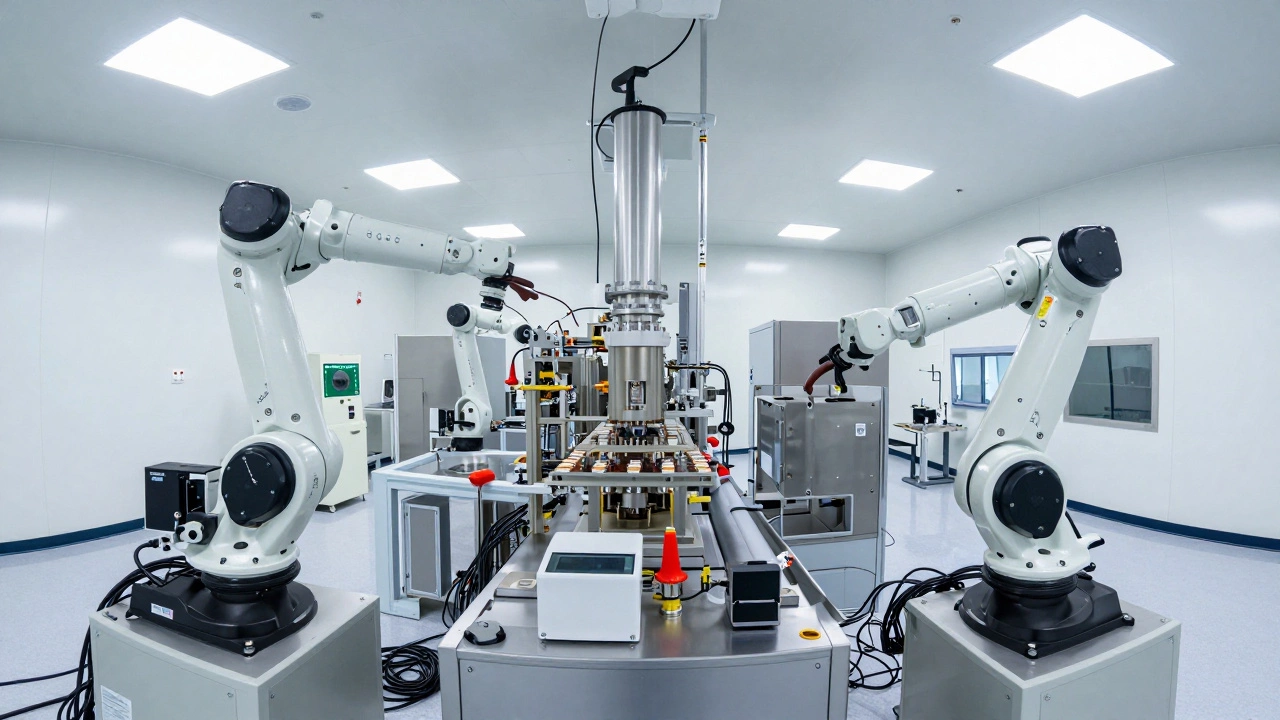
Wages are another factor. While US wages are higher than in Southeast Asia, productivity is also higher. Automation helps bridge this gap. A fully automated warehouse or assembly line doesn't care about hourly wage differences as much as it cares about electricity costs and logistics speed. As robotics become cheaper and more sophisticated, the advantage of low-cost labor diminishes. This means some manufacturing returns not because people are cheaper, but because machines make location less relevant.
Supply Chain Resilience vs. Cost Efficiency
Before 2020, the dominant strategy was efficiency at all costs. Keep inventory low, source from the cheapest provider, and ship quickly. Now, the strategy is resilience. Companies are willing to pay a premium for shorter supply chains to avoid disruptions.
Nearshoring-moving production to neighboring countries like Mexico-is a major part of this trend. Mexico has seen a surge in foreign direct investment as companies seek to stay within North American trade agreements like USMCA. This isn't exactly "bringing back" manufacturing to the US, but it does bring it closer to home, reducing transit times and geopolitical risk.
True reshoring, however, happens when the total cost of ownership-including shipping delays, tariffs, and inventory buffers-makes domestic production competitive. For heavy or bulky items like construction materials, appliances, and automotive parts, this tipping point has already arrived. Shipping a refrigerator from China across the Pacific is expensive and slow; making it in Tennessee makes logistical sense.
| Factor | Offshoring (Traditional) | Reshoring/Nearshoring (Current Trend) |
|---|---|---|
| Primary Driver | Lowest unit labor cost | Supply chain security & speed |
| Inventory Model | Just-in-Time (low stock) | Just-in-Case (buffer stock) |
| Risk Profile | High (geopolitical, pandemics) | Lower (domestic/regional control) |
| Automation Level | Moderate | High (to offset labor costs) |
| Government Role | Minimal | Active (subsidies, tariffs) |
Sectors Leading the Charge
Not all manufacturing is equal. Some industries are naturally suited for return, while others will likely stay global. Here’s where we see real momentum:
- Semiconductors: Critical for national security and tech dominance. The CHIPS Act ensures this stays here.
- Electric Vehicle Batteries: The IRA mandates that a percentage of battery components be sourced from North America to qualify for tax credits. This is creating a whole new ecosystem of mining, refining, and cell production in the US.
- Pharmaceuticals: After drug shortages during the pandemic, there is renewed focus on domestic API (active pharmaceutical ingredient) production. The Biosecure Act aims to reduce reliance on Chinese biomanufacturing.
- Defense & Aerospace: Always domestically focused due to export controls and security requirements. This sector continues to grow with increased defense spending.
Conversely, textiles, footwear, and basic electronics assembly remain heavily outsourced. The labor intensity and low margins make it nearly impossible to compete with Asian producers without prohibitive tariffs, which would hurt consumers.
Challenges That Remain
Despite the optimism, significant headwinds persist. First, infrastructure. Many existing industrial sites lack the modern grid capacity needed for energy-intensive processes like steelmaking or chip fabrication. Upgrading the power grid is a multi-year project.
Second, regulatory complexity. Environmental reviews, permitting, and zoning laws can delay projects for years. Streamlining these processes is essential for keeping pace with global competitors. Countries like China often approve large-scale industrial projects in months, whereas it can take years in the US.
Third, the scale of the task. The US lost roughly 5 million manufacturing jobs between 2000 and 2010. Bringing them all back is neither feasible nor desirable given automation trends. The goal should be high-value, high-tech manufacturing, not recreating the job market of the mid-20th century.
The Verdict: A Hybrid Future
So, can America bring back manufacturing? Yes, but it will look different. We won't see a flood of sweatshops returning. Instead, we'll see a robust, automated, and strategically focused industrial base. Key technologies will be made here. Consumer goods will increasingly come from nearshore partners like Mexico. And the workforce will need to adapt to working alongside advanced robotics.
The government schemes launched in the early 2020s have planted the seeds. Whether they bear fruit depends on execution, education reform, and sustained political will. If done right, the US could emerge as a leader in next-generation manufacturing, combining innovation with resilience.
Will manufacturing jobs return to the US in large numbers?
Not in the same volume as before. Automation means fewer workers are needed per unit of output. However, there will be growth in high-skilled technical roles, engineering, and maintenance positions. The net gain may be modest, but the quality of jobs will be higher.
How does the CHIPS Act help bring back manufacturing?
The CHIPS Act provides billions in direct subsidies and tax breaks for companies that build semiconductor fabrication plants in the US. This offsets the high capital costs and encourages firms like Intel and TSMC to invest domestically rather than overseas.
Is nearshoring to Mexico considered reshoring?
Technically, no. Reshoring means bringing production back to the US. Nearshoring moves it to a nearby country, usually Mexico or Canada. Both strategies aim to shorten supply chains and reduce risk, but only reshoring creates US-based jobs.
Which industries are most likely to reshore?
Industries critical to national security or heavily subsidized by law are leading the way. These include semiconductors, electric vehicle batteries, pharmaceuticals, and defense equipment. Heavy industries like steel and aluminum also benefit from tariffs and local demand.
What role does automation play in reshoring?
Automation is key. It reduces the reliance on cheap labor, making it economically viable to produce goods in high-wage countries like the US. Robots and AI handle repetitive tasks, allowing human workers to focus on supervision, programming, and complex problem-solving.